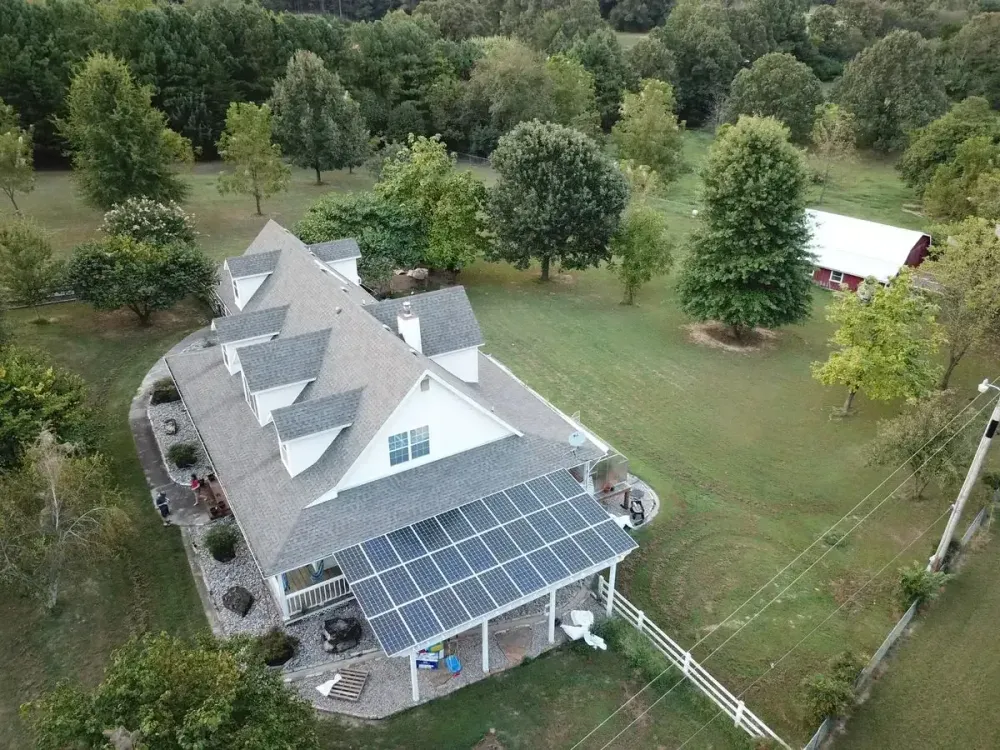
What Arkansas Homeowners Should Know Before Going Solar in 2026
For most homeowners, the first question is not whether solar is interesting. It is whether it makes sense for their house, their bill, and their budget. That is the right place to start. Solar can be a strong investment, but only when the numbers are grounded in the real details of the property.
Your Electric Bill and Roof
One of the biggest factors is the size and shape of your electric bill. Homes with higher daytime usage often see the clearest value because the system is offsetting a meaningful amount of power over time. If your usage is low or your roof cannot support enough panels to make a difference, the economics may be weaker. That does not automatically rule solar out, but it does change the conversation.
Your roof matters just as much as your bill. A newer roof with good sun exposure is usually the easiest path. If the roof is aging, heavily shaded, or broken up by dormers and vents, the design can become less efficient. A good solar proposal should talk honestly about shading, orientation, and usable roof area. If a quote skips those details and jumps straight to savings claims, that is a warning sign.
The Federal Tax Credit Has Changed
One of the biggest shifts for residential solar in 2026 is the expiration of the federal residential clean energy credit (Section 25D). The 30% credit expired on December 31, 2025 under the One Big Beautiful Bill, and homeowners can no longer claim it on new installations. That changes the math, but it does not eliminate the case for solar. It just means the decision now rests more squarely on utility savings and long-term value rather than on a tax incentive.
For homeowners with high electric bills and strong roof conditions, the economics can still work. Electricity rates in Arkansas are not getting cheaper, and a well-designed system will continue to offset meaningful utility cost over its 25-plus year lifespan. The absence of the credit means the payback period is longer than it was a year ago, but for the right home, the investment still holds up.
Financing and Getting Multiple Quotes
Financing is another area where homeowners can get tripped up. Some people are best served by paying cash. Others prefer a loan to preserve cash flow. Either option can work, but the proposal needs to separate the cost of the solar system from the cost of the financing. Monthly payment comparisons can be useful, but they should not replace a clear explanation of total cost, expected production, and estimated payback.
Without the federal credit in the picture, it is more important than ever to get multiple quotes and compare them carefully. Look at system cost per watt, production estimates, warranty terms, and who will service the system after installation. A lower price is not always the better deal if the installer cuts corners on design or disappears after the job is done.
Long-Term Support Matters
Homeowners should also ask a practical question that often gets overlooked: who will support the system after it is installed? A lower price is not always the better deal if the installer is vague about service, monitoring, warranty support, or who to call when something goes wrong. Good solar is not just a purchase. It is a long-term system attached to your home.
The strongest residential projects in 2026 have a few things in common. The home has solid sun exposure, a roof in good condition, an electric bill high enough to justify the investment, and a homeowner who wants a long-term reduction in utility costs. If that sounds like your situation, the next step is not guessing. It is getting a real assessment built around your roof, your usage, and your goals.
Thinking about solar for your home? Request a free assessment from Delta Solar and we will give you a straight answer based on your roof, your usage, and the current numbers.
Related Reading
What the total solar eclipse means for solar energy production in Arkansas and how solar installations handle temporary shading events.
Delta Solar partners with Southeast Arkansas College to bring solar energy education and installation to the campus, supporting workforce development.
The USDA REAP grant program increases maximum coverage to 50% of project costs, making solar even more accessible for rural and agricultural businesses.
Want a residential review built around your home?
Talk through your roof, bill history, and likely system fit with a practical residential consultation.
Explore Residential Solar