USDA's New REAP Rules: Build First, Apply Later
USDA published a new rule for the Rural Energy for America Program (REAP) on October 1, 2026, and it takes effect October 16. It is the biggest change to the program in years. Under the old rules, you applied for a grant and built the system if you won. Under the new rules, you build first and apply later, once the system has a year of real production behind it.
Here is what changed, what no longer qualifies, and how to plan a farm or rural business project around it. Everything below comes from the rule itself, Federal Register document 2026-20178.
What Changed
- Build first. The system must be fully built and running before you apply. The application includes 12 months of actual production or savings data and 12 months of energy data from before the installation.
- A timing window. The period when you paid for the project must end between 12 and 24 months before you apply. For the first application window under the new rule, that stretches to 12 to 36 months.
- Smaller grants. The largest grant request for a renewable energy system is $500,000, down from $1,000,000 under the last funding notice. Energy efficiency projects top out at $250,000, and the smallest request is $1,500.
- A bigger owner share. You must cover at least 75% of project cost yourself, so a grant pays for a quarter of the cost at most.
- One award a year. Each owner can receive one award per federal fiscal year, and businesses with shared owners count as one.
- One national competition. State-level competitions are gone. Every application is scored nationally.
- Loans stay separate. REAP guaranteed loans can still help with up-front costs, and you apply for them separately. A REAP grant and loan together cannot cover more than 75% of project cost.
What No Longer Qualifies
The rule says USDA wants to fund "appropriately scaled, on farm" systems rather than large solar developments. In practice, these projects are now ineligible for a grant:
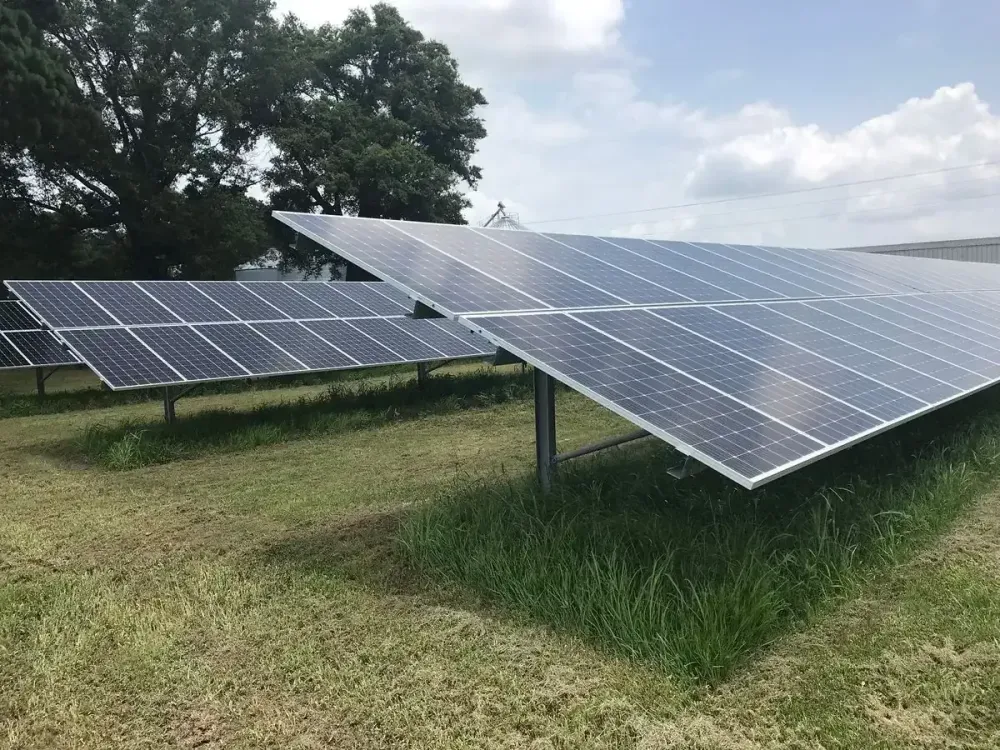
- Ground-mount solar on certified cropland, as the Farm Service Agency defines it.
- Ground-mount systems that cannot show past energy use to match their size.
- Solar systems with any component made in a country on the federal foreign adversary list (15 CFR 791.4), which includes China. Systems installed before October 1, 2026 are exempt from this one.
- Adding a battery to an existing system, or a battery on its own. A battery paired with new solar can be no larger than the solar system, and a system with storage cannot produce more than 120% of your previous year's use.
- Projects spread across more than one location, and EV chargers.
- Projects whose simple payback is longer than the equipment's useful life.
Good News for Systems Already Built
Because you now apply after the fact, a system built in the last few years may be able to apply in the first window, as long as the project period ended 12 to 36 months before the application. Those systems are also exempt from the foreign component rule. The other rules still apply, including the cropland rule.
If your farm or business added solar in the last three years, start gathering records now:
- Every invoice, with the dates each cost was incurred and paid.
- Twelve months of production data from your monitoring system.
- Twelve months of utility bills from before the system went in.
- For projects costing $200,000 or more, a completion certificate from a professional engineer licensed in Arkansas.
How the Federal Tax Credit Fits
Under current law, commercial and agricultural systems can still claim the 30% federal tax credit if they are placed in service by December 31, 2027. The new REAP timeline works with that deadline rather than against it. A farm that builds in 2027 can claim the credit, run the system for a year, and then apply for REAP once a funding notice is open.
The catch is cash flow. The grant arrives a year or more after the system is built, so you need to finance the full cost up front. A REAP guaranteed loan or a conventional ag loan can carry that gap. REAP grants are generally taxable income and do not reduce the basis used for the tax credit, but have your tax advisor run your own numbers.
What We Don't Know Yet
- When applications open. USDA still has to publish a funding notice with dates, the amount of money available, and how applications will be scored.
- Whether the rule changes again. USDA is taking public comments until November 2, 2026, and could revise the rule afterward. You can comment at regulations.gov under docket RBS-26-Business-0529.
- What happens to older applications. Applications with a Form 1940-1 signed by both the applicant and USDA before October 16 continue under their existing terms. Earlier applications without one will need to start over under the new rule.
Planning a New Project
If you are planning a new system and want to keep REAP open as an option, size it to your actual use, put it on a roof or on land that is not certified cropland, and confirm where every major component was made before you sign. Those three choices decide eligibility long before any application is filed.
Send us your last twelve months of bills and tell us where you would put the array. We will tell you whether the project fits the new REAP rules and the 2027 tax credit deadline before you spend anything.
Related Reading
Delta Solar participates in the Heartland Challenge, showcasing solar energy solutions for agricultural and rural communities across the region.
The USDA REAP grant program increases maximum coverage to 50% of project costs, making solar even more accessible for rural and agricultural businesses.
A guide for agricultural businesses on how to maximize savings through the USDA REAP grant program combined with federal tax incentives.
Need a solar review for a farm or rural business?
See how system design, usage, and incentive timing fit together before you make a decision.
Explore Agricultural Solar