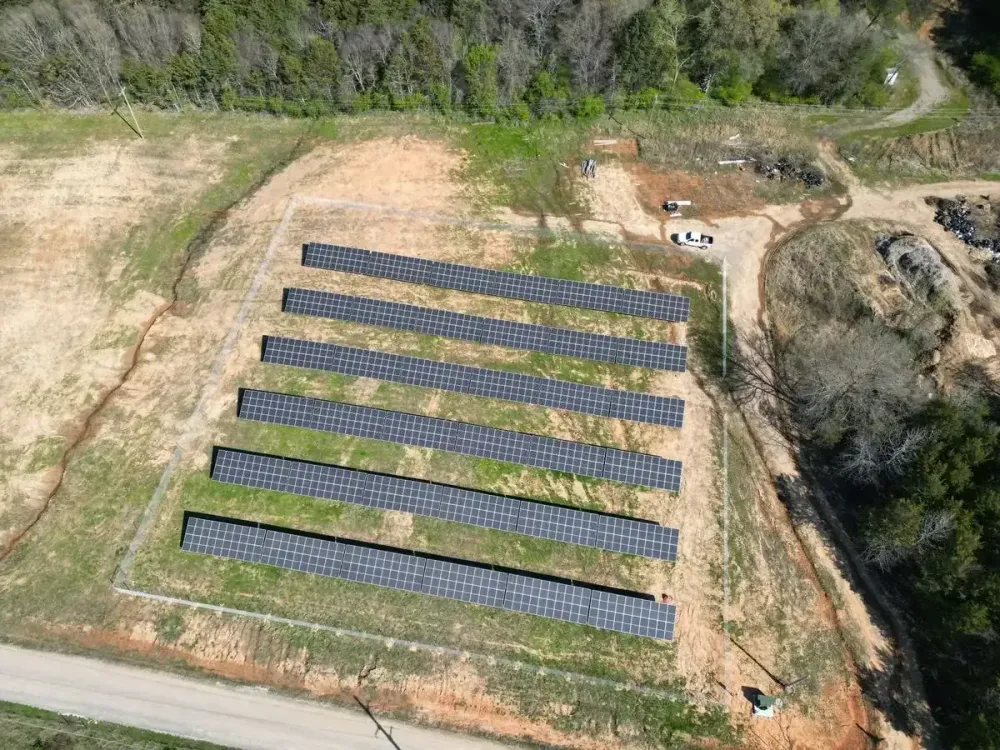
City of England Pioneering New Solar Power Model
The City of England launched a notable municipal solar model by partnering with Delta Solar to use non-developable land for solar arrays serving public facilities and other Arkansas customers. The first phase covered roughly 12 acres near Highway 165 and created room for more than 2 MW of solar capacity.
A central feature of the project was ownership. Instead of relying on a long-term third-party structure, the city chose to own its system outright. That approach was designed to reduce exposure to uncertain future electric rates and allow the city to keep the full value of long-term energy savings.
Under the partnership, Delta Solar built and maintained the system while the city retained ownership of the array powering facilities such as the courthouse and parks system. According to the original project announcement, the first phase was expected to save the city more than $174,000 over 30 years.
The England project remains a useful example for municipalities and public entities weighing solar ownership models. Structure matters. The best-fit arrangement depends on who can use incentives, who carries operational responsibility, and who should keep the long-term savings.
Related Reading
Woodlawn School District completes a 512 kW solar installation with Delta Solar, becoming one of the largest school solar projects in the region.
Delta Solar breaks ground on the Woodlawn School solar project, marking a milestone in educational solar adoption in Arkansas.
Written in 2022, this post explains how the Inflation Reduction Act set the federal solar Investment Tax Credit at 30% for commercial and institutional projects. Tax law has changed since then, so check our Tax Incentives page for the current rules.
Want to model a commercial project with real assumptions?
Start with a practical review of your facility, utility profile, and project options.
Explore Commercial Solar